Thoughtful guidance on oral health, cosmetic dentistry, and treatment options.
Dental Bonding vs. Porcelain Veneers: Which Fits Your Smile?
Start With the Change You Want to Make
A small chip, a gap or an uneven edge can draw your attention every time you smile. Dental bonding and porcelain veneers can both improve the appearance of teeth, but the most suitable option depends on the change you want, the health of your teeth and how much treatment is appropriate.
At Coconut Creek Cosmetic & Implant Dentistry, smile planning begins with those questions. Dr. Emmy Estenoz can help you compare options that suit your face, bite and preferences, rather than choosing a treatment simply because it is popular.
What Is Dental Bonding?
Cosmetic bonding uses tooth-colored composite resin that is applied, shaped and polished directly on a tooth. It may be suitable for small chips, modest gaps, uneven edges or selected changes in shape and color. Some treatments can be completed in one visit, although more involved work may require additional appointments.
Bonding often allows a conservative approach with little or no removal of healthy tooth structure. That depends on the problem being treated; preparation, decay removal or other dental work may still be needed. Composite can often be repaired or reshaped, which is useful when a small area chips or wears.
What Are Porcelain Veneers?
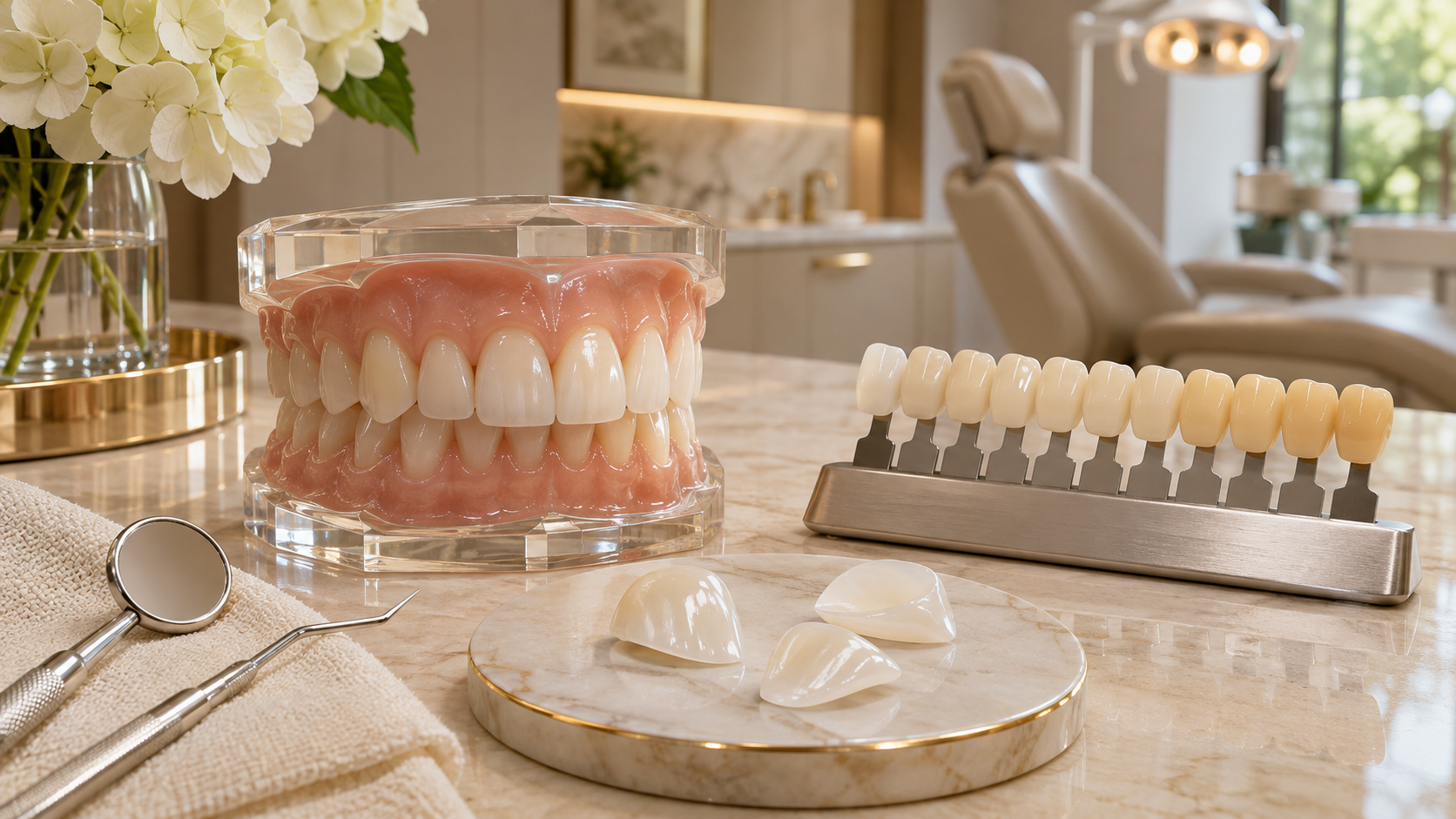
Porcelain veneers are thin, custom-made ceramic restorations bonded to the front surfaces of teeth. They can change the visible shape, proportion and color of selected teeth. Planning typically involves assessing the teeth and gums, discussing the proposed design, and making the restorations before fitting and bonding them.
Many veneer treatments require some enamel removal. That change is irreversible, and the teeth will usually need restorations going forward. Minimal-preparation approaches are appropriate only for selected cases. Read more about porcelain veneers at our Coconut Creek office.
How Do the Options Compare?
- Scale of the change: Bonding is often useful for localized refinements. Porcelain may suit a broader change across the visible surfaces of several teeth, depending on the case.
- Tooth preparation: Bonding is often more conservative. Veneers commonly require irreversible enamel preparation.
- Appearance: Both can be designed to look natural. Porcelain offers good control of translucency and shade; the result still depends on planning, materials and technique.
- Staining and wear: Composite is generally more prone to staining and wear than porcelain and may need polishing or repair sooner. Porcelain is stain-resistant, not maintenance-free.
- Repair: Bonding can often be repaired directly. A damaged porcelain veneer may need replacement, though the options depend on the damage.
Plan a Smile That Feels Like You
Ready to Plan Your Visit?
Talk with our Coconut Creek team about the changes you have in mind. An individual evaluation can help you compare bonding, veneers and other suitable options. Call (954) 642-2203 to request an appointment.
New to our office and without dental insurance? Ask about our $70 exam and X-rays offer. Our team can help you plan appropriate next steps for preventive, cosmetic, restorative, or implant care.

When Another Approach May Be Better
Teeth and gums need to be healthy before cosmetic treatment begins. Decay, gum disease, significant tooth wear or a bite problem may change the plan. A heavily damaged tooth may need a different restoration rather than bonding or a veneer.
If your main concern is color, professional whitening may be worth discussing first. If position or crowding is the concern, orthodontic treatment may address it more directly. Neither bonding nor veneers moves the roots of teeth. Sometimes the most conservative plan combines treatments in a carefully chosen sequence.
What Affects the Cost?
Bonding generally has a lower initial cost per tooth than porcelain veneers. The total depends on the number of teeth, the complexity of the changes, preparation, materials and any treatment needed first. A broader composite treatment may involve more time and cost than a small repair.
Consider long-term care as well as the initial fee. Composite may need periodic polishing, repair or replacement. Porcelain veneers can also chip, loosen or require replacement. Ask for a written estimate and discuss what future maintenance may involve. Insurance coverage varies, and treatment performed solely for appearance is often not covered.
Choosing a Natural-Looking Result
A balanced smile does not have to look uniformly white or perfectly identical from tooth to tooth. Shape, proportion, texture and shade should be considered alongside your lips, face and the teeth that will remain untreated.
Bring photographs that help explain what you like, but use them as a starting point rather than a promised outcome. Ask whether a mock-up or other preview would be useful for your case. Our smile design approach considers your goals together with oral health and function.
Looking After Bonding and Veneers
Brush with fluoride toothpaste, clean between your teeth and keep the review appointments recommended for you. Avoid using teeth to open packaging or bite hard objects. Tell your dentist if you grind or clench so protective options can be discussed.
Whitening products do not lighten existing composite or porcelain in the same way they lighten natural teeth. If a brighter overall shade is a goal, discuss the order of treatment before selecting the restoration color.
Questions to Ask Before Deciding
- Could a smaller change, whitening or orthodontics meet my goal?
- How much healthy tooth structure would be removed?
- Which teeth need treatment, and how will they blend with the others?
- How might my bite or grinding affect the result?
- What maintenance and replacement costs should I plan for?
- Can I review the proposed shape and shade before final treatment?
Explore Your Options in Coconut Creek
Whether you want a subtle refinement or a broader smile update, a personal evaluation is the right starting point. Meet Dr. Emmy Estenoz and request an appointment at Coconut Creek Cosmetic & Implant Dentistry, serving Coconut Creek and nearby Margate.
Continue Your Reading
For additional patient education, see the Canadian Dental Association’s guide to bonding and veneers.
Is bonding better than porcelain veneers?
Neither is best for everyone. Bonding may suit a small, conservative refinement; porcelain may suit selected broader changes. Your teeth, bite, goals and maintenance preferences guide the choice.
Does bonding damage healthy teeth?
Cosmetic bonding often needs little or no removal of healthy tooth structure, but this varies. Ask what preparation your specific treatment requires.
Can bonding or veneers be whitened later?
They do not respond to whitening like natural teeth. If you want a brighter overall shade, discuss whitening before the restoration color is selected.
How long will the results last?
Longevity varies with the material, size of the restoration, bite, grinding and home care. Both options may need maintenance or replacement; your dentist can explain expectations for your case.
Can veneers straighten crooked teeth?
Veneers can change the visible appearance of selected teeth, but they do not move teeth or correct every bite problem. Orthodontic treatment may be a more suitable or conservative option.
Contact Us
Location
4825 Coconut Creek PKWY, Coconut Creek, FL 33063
Phone Number
(954) 642-2203Business Hours
Monday - Friday 9AM - 5PM

Thank you! Your appointment request has been received. Our team will contact you to confirm availability.
Oops! Something went wrong while submitting the form.