Thoughtful guidance on oral health, cosmetic dentistry, and treatment options.
Types of Dental Implants
Types of Dental Implants: Finding the Right Solution
In our previous posts, we explored the numerous benefits of dental implants and provided an overview of what to expect during the dental implant procedure. This educational overview explains several implant designs and treatment approaches used in dentistry. Understanding the differences can help you ask informed questions at a consultation. Suitability depends on your health, anatomy and treatment goals; your proposed plan should identify the procedures and clinicians involved. Ask which approaches are available through our office and which would involve outside care.
Types of Dental Implants
1. Endosteal Implants:
- Endosteal implants are the most common type of dental implants. They are typically made of titanium and shaped like small screws.
- Procedure: These implants are placed in the jawbone. Some treatment plans include a later procedure to uncover the implant and attach a connector, while one-stage approaches may avoid that step. A crown, bridge or denture is attached when the implant is ready to support it.
- Candidacy: Bone quantity and quality, gum health, medical history and the planned restoration all affect suitability.
2. Subperiosteal Implants:
- Subperiosteal implants sit beneath the gum over the jawbone. They are a less-common approach that may be considered in selected cases with limited bone.
- Design: A framework follows the jawbone, with connectors extending through the gum to support replacement teeth. Planning and fixation depend on the system used.
- Candidacy: Limited bone does not automatically make this the right choice. A clinician must assess the anatomy, risks and alternatives.
3. All-on-4® Full-Arch Treatment:
- All-on-4® is a trademarked treatment concept that uses four implants to support a fixed full arch of replacement teeth. It describes a treatment approach rather than a separate implant material or design.
- Procedure: Implant positions are planned to use the available bone. Some suitable patients can avoid grafting or receive a temporary fixed bridge soon after placement, but those options depend on anatomy and implant stability. Healing and final-restoration timing vary.
- Candidacy: For selected patients needing a full-arch replacement. Other plans may use a different number of implants or a removable overdenture. Compare cleaning needs, costs, surgical risks and maintenance.
4. Zygomatic Implants:
- Zygomatic implants are used in cases where there is severe bone loss in the upper jaw. These implants are anchored in the cheekbone (zygoma) rather than the jawbone.
- Planning: This is a complex surgical and restorative approach requiring relevant clinician expertise. Assessment should address alternatives and complications, including sinus problems.
- Candidacy: May be considered for selected patients with substantial upper-jaw bone deficiency, including some with unsuccessful prior graft or implant treatment. It is not the automatic choice for every patient with bone loss.
Planning Your Implant Consultation at Coconut Creek Cosmetic and Implant Dentistry
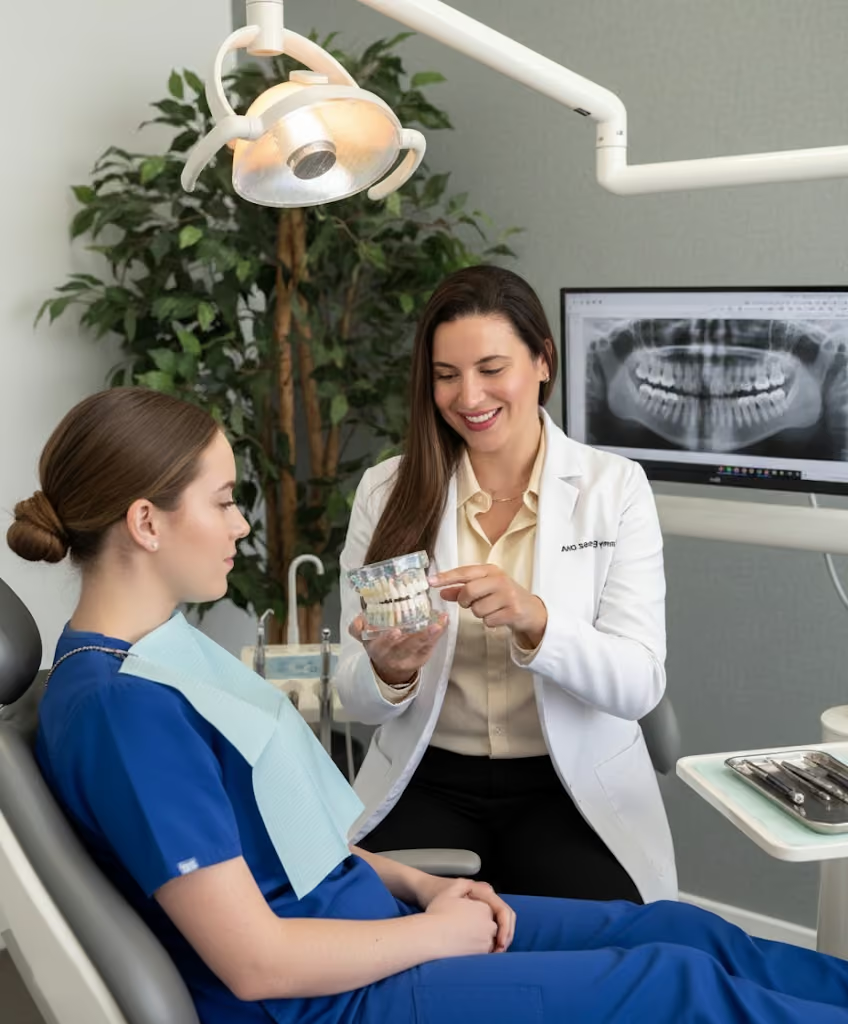
At Coconut Creek Cosmetic and Implant Dentistry, Dr. Emmy Estenoz and our team understand that every patient has unique needs. A consultation is an opportunity to review your oral health and goals, compare reasonable treatment options, and ask who would provide each stage of care. The proposed treatment should explain its benefits, risks, maintenance needs and alternatives, which may include a conventional bridge or removable denture.
Bone Augmentation: Preparing for Dental Implants
Some patients need bone augmentation to improve the proposed implant site; others do not. The need depends on imaging, anatomy and the restoration planned. These procedures add their own risks, healing time and costs:
- Bone Grafting: This procedure involves adding bone or a bone substitute where there is not enough bone volume for the planned implant. Different graft materials may be used; your clinician should explain the proposed material and its risks.
- Sinus Lift: For selected implant sites in the back of the upper jaw, a sinus lift raises the sinus membrane and adds graft material beneath it when there is not enough bone height for the planned implant.
- Ridge Expansion: In selected cases, a narrow jaw ridge can be widened, sometimes with graft material, to create space for implant placement.
Ready to Plan Your Visit?
New to our office and without dental insurance? Ask about our $70 exam and X-rays offer. Our team can help you plan appropriate next steps for preventive, cosmetic, restorative, or implant care.

Conclusion
Choosing an implant approach means balancing your anatomy, health, preferences and ability to maintain the restoration. At Coconut Creek Cosmetic and Implant Dentistry, Dr. Emmy Estenoz and our team can help you discuss those priorities during your consultation. Ask for a clear explanation of the proposed treatment and who will perform it. Implants and replacement teeth need regular cleaning and follow-up, and components may eventually need repair or replacement.
Are you ready to explore your dental implant options? Contact us to schedule a consultation and discuss which tooth-replacement options may be appropriate for you. Visit our Contact page for more information.
Explore our dental implant options and meet Dr. Emmy Estenoz at our Coconut Creek office.
Sources and Further Information
- American Academy of Implant Dentistry: implant types and techniques
- American Academy of Periodontology: single-tooth implant steps
- Nobel Biocare: the All-on-4® treatment concept
- ITI consensus report on zygomatic implants
- FDA: dental implant benefits, risks and care
Continue Your Reading
Contact Us
Location
4825 Coconut Creek PKWY, Coconut Creek, FL 33063
Phone Number
(954) 642-2203Business Hours
Monday - Friday 9AM - 5PM

Thank you! Your appointment request has been received. Our team will contact you to confirm availability.
Oops! Something went wrong while submitting the form.